Research & Development

Personal images.
Human experiences.
Open questions.

What can a personal image make us feel—and help us understand?

An invitation to bring research and practical knowledge into the exploration of personalised AI, human experience and care.

Explore the questions
A photograph becomes a scenePersonal experiment

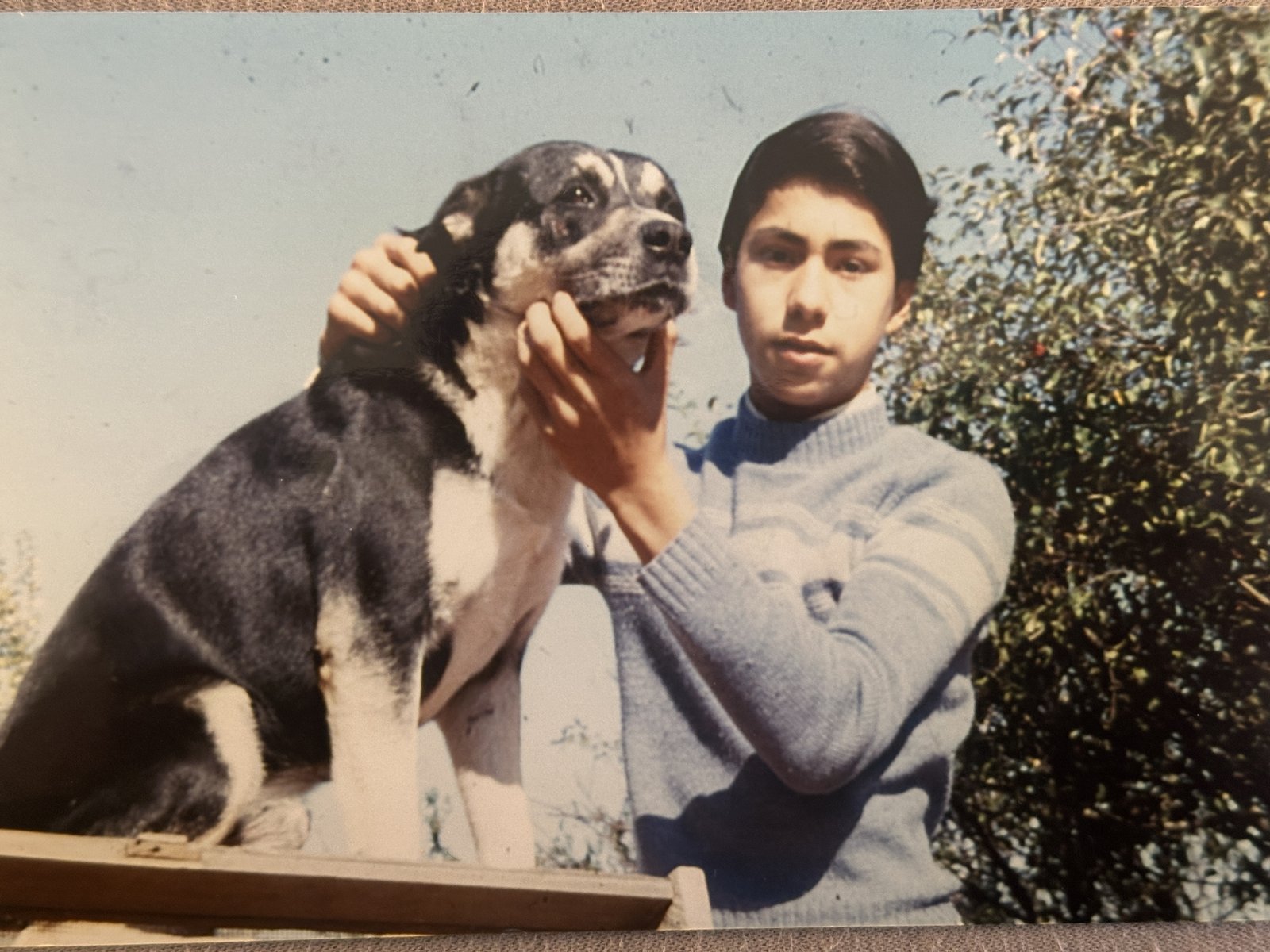
My childhood photograph with my dog, reimagined as a journey. Press play to explore.

I bring technical capabilities and experiences from care. I want to learn from people with relevant expertise and use that knowledge to guide further development.

Bring your perspective ↗
Three areas of inquiry

Experiences to learn from.
Ideas to investigate.

Some work has been created; other directions remain ideas. Each opens a different question.

01 / CARE & LIFE STORIESObserved

Personal memories

Wedding photographs brought to life, following conversations about the people and moments that matter.

What does seeing a personal photograph come to life mean to the person who asked for it?

The experience & questions

It begins with a relationship. An older person shares their life story; I explain what I can create, and they sometimes request a scene using their photographs.

I have created videos of people with their partners when they were young, and observed happiness in their responses. I would like to understand those experiences more deeply.

  • What research could help interpret these responses?
  • What might animation add to an ordinary photograph?
  • How can the person's own account guide further exploration?
Share knowledge about this area ↗
My childhood photograph with my dog
02 / IMAGERY & MEANINGExploring

Imagined experiences

A real childhood photograph becomes an imagined journey, connecting different parts of my life.

What might we feel when we see ourselves in a meaningful scene that never happened?

The experience & questions

I created a video of myself as a boy walking with my dog in Norway's Vigeland Park. The scene is imagined, based on a real childhood photograph.

A further idea concerns the warmth I missed from my father: an explicitly imagined scene in which he shows affection towards me and my dog. This scene is still an idea.

  • How might this relate to mental imagery and autobiographical memory?
  • What knowledge could guide exploration of imagined supportive interactions?
  • How could emotional responses be understood and evaluated?
Share knowledge about this area ↗
03 / AWARENESS & PERSPECTIVEIdea

Experiencing care

Exploring video and VR from the viewpoint of someone receiving care: what they see and hear.

Could experiencing care from the receiving side change how caregivers reflect on their actions?

The idea & questions

I have witnessed handling with little communication or explanation. This prompted an idea: record or recreate a care situation from the older person's viewpoint.

The purpose would be awareness and reflection on communication, acknowledgement and time to respond. This has not yet been developed.

  • What can we learn from immersive education and perspective-taking?
  • What can a recording convey—and what might it miss?
  • How could its value for caregiver reflection be investigated?
Share knowledge about this area ↗
Background & motivation

Where technology
meets care.

My work in elderly care has brought new questions to a long-standing interest in technology and visual creation.

At the centre is a person: their history, relationships, wishes and experience of life.

01

Thirty years in IT

Technical problem-solving, global support and international team leadership.

02

Independent AI work

Hands-on creation of personalised images and videos, processed locally on my own equipment.

03

Working in elderly care

I work in a care home and am completing my Danish social and healthcare helper qualification, SOSU-hjælper. My work includes contact with people living with dementia and terminal illness.

Care studies that inform my approach

My studies include communication, professional relationships, life history, professional observation and person-centred care. I use frameworks such as Kitwood's approach, the flower of emotional needs and the iceberg model in my care work.

I am interested in how this knowledge can inform these activities and the questions we ask about them.

How personal photographs are handled

I explain the process and agree on the scene with the person. Paper photographs are digitised, and the images and video are processed on my own computer without uploading them to external AI services.

I deliver the finished video on USB and delete the source photographs afterwards as agreed.

An invitation to learn

Bring your knowledge
into the exploration.

If these questions connect with your research, care practice, clinical work or teaching, I would welcome your perspective.

These examples include care observations, personal experiments and undeveloped ideas. They have not been evaluated in a formal study.

  • Research, theories or projects worth exploring
  • Experience from practice or education
  • Different interpretations or overlooked questions
  • Guidance on what to investigate—and how
Share your perspective